Burger Company grew from a forced COVID pivot into a nationwide smash burger chain. Menus, lunch lists and campaigns run on the restaurants' InfoBox screens.
Burger Company's story began in spring 2020, when the COVID lockdown stopped sales at a Helsinki lunch restaurant overnight. Within weeks, founder Nehal Siddiqui turned the kitchen into a delivery-first smash burger concept, and on the first day around 500 orders came in against a target of 50. That became Burger Company: a nationwide chain that already has 16 restaurants across Finland.
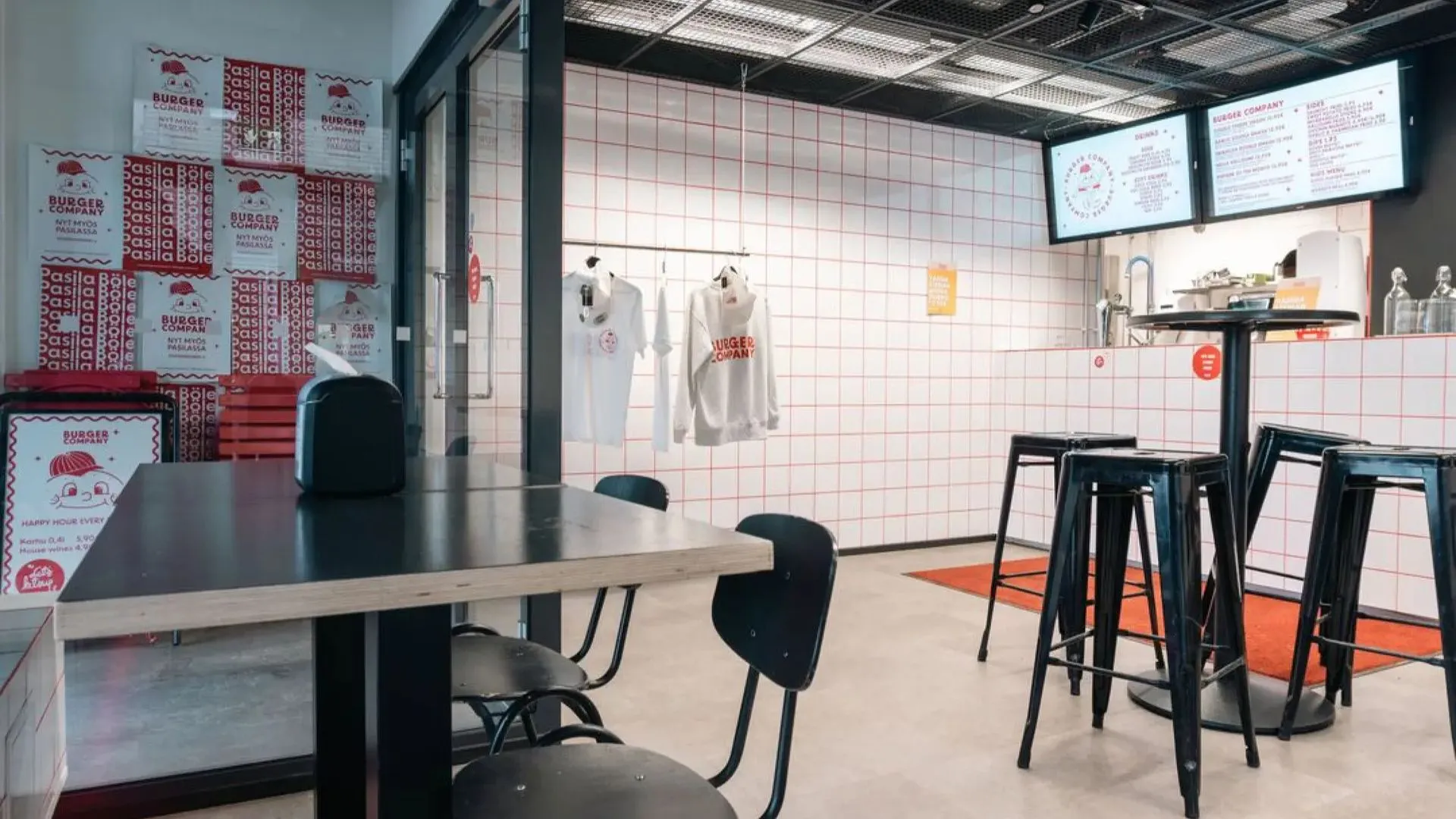
In every restaurant, the menu lives on screens. The chain's 16 restaurants have a total of 31 InfoBox screens showing the menu, a scheduled lunch list and current campaigns. All content is updated remotely, with no printed boards.
restaurants across Finland
InfoBox screens in the chain's restaurants
burgers sold in the chain's history
Burger Company in brief: from forced pivot to nationwide chain
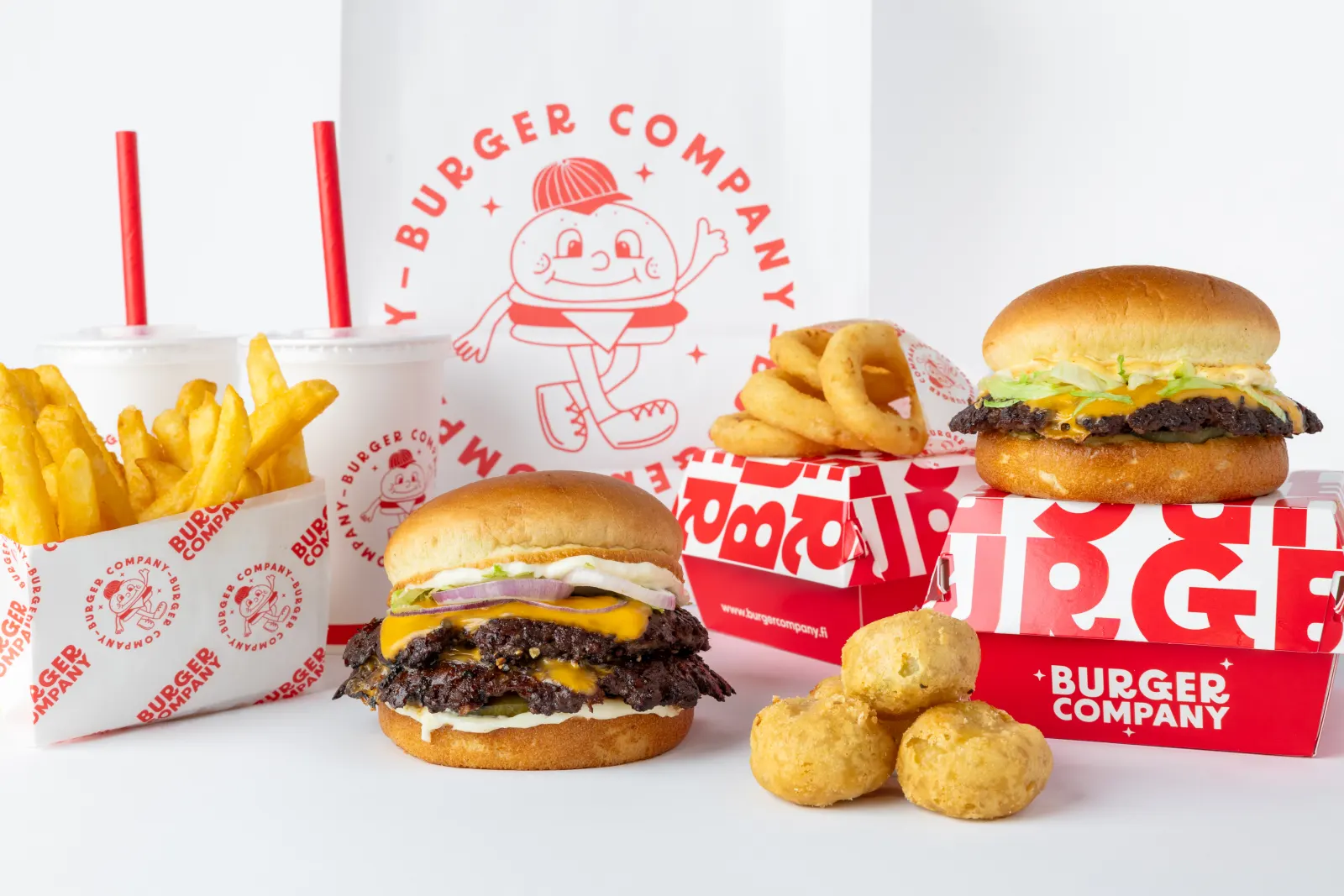
Burger Company's idea is deliberately simple: the perfect smash burger. The menu is kept short so quality stays high, and the whole menu is also available plant-based. The concept was built delivery-first from the start, and that is still part of the chain's DNA: in an interview with Avec Media (in Finnish) in summer 2025, the chain said it sees home delivery as an opportunity, not a threat.
The first proper restaurant opened in Hernesaari, Helsinki, in May 2021. Since then the chain has grown fast: Helsinki already has six restaurants, and Burger Company can also be found in Espoo, Vantaa, Turku, Tampere, Pori, Porvoo and Hyvinkää, among others. Since 2024, growth has been driven by local entrepreneurs who open new restaurants with the chain's concept. Learn more at burgercompany.fi.
Lunch, campaigns and the menu on screen
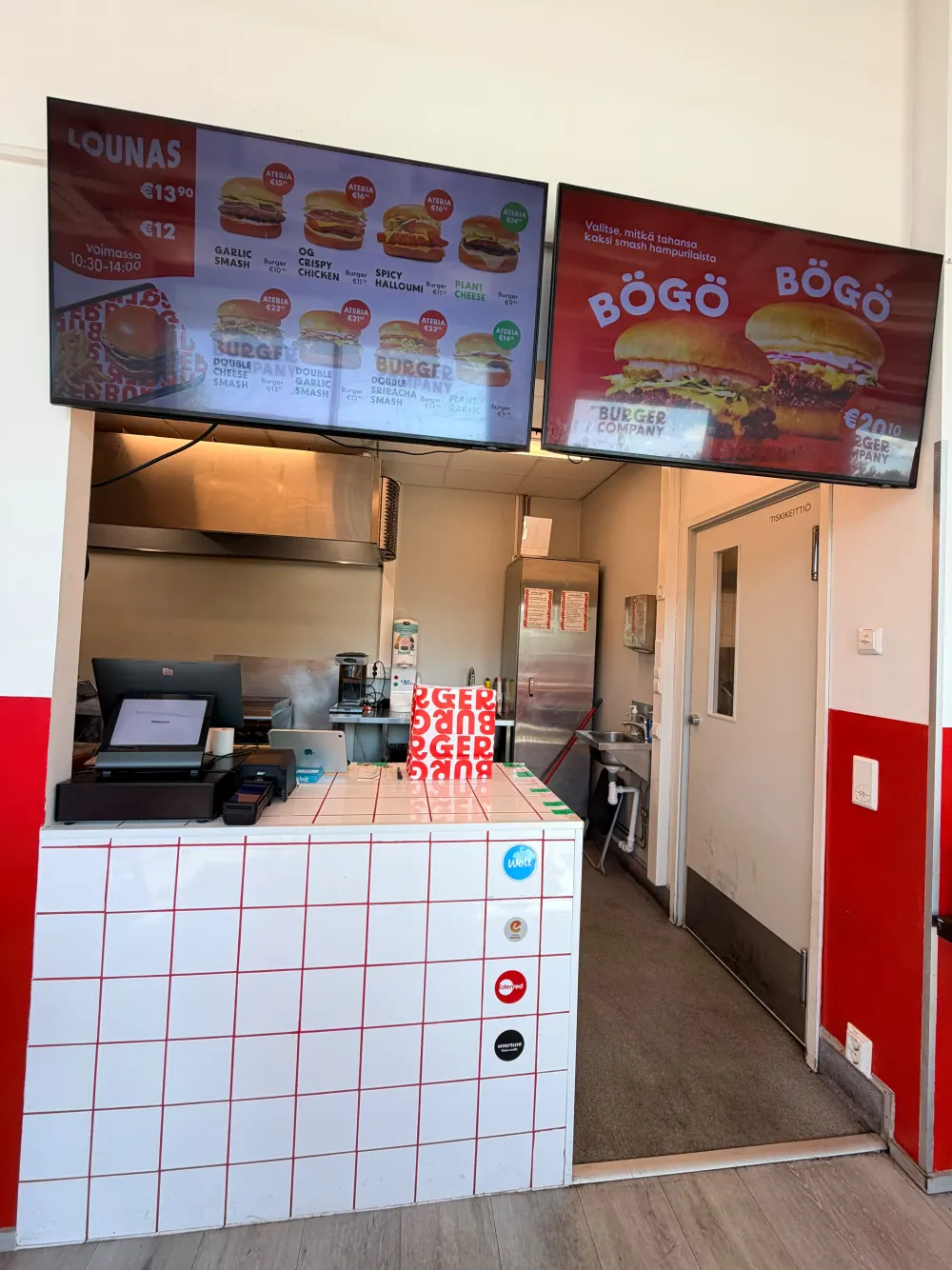
A fast-growing chain has plenty to communicate: prices are reviewed, seasonal products come and go, and campaigns change. Weekdays also have their own rhythm, as lunch runs from 10:30 to 14:00 with its own pricing. Keeping all of this up to date on printed boards in 16 restaurants would mean constant running around.
That is why Burger Company has InfoBox screens above the counter, one or more depending on the restaurant. The screens show the menu, the lunch list with prices scheduled for lunchtime, and a current campaign such as a two-smash-burger deal. Thanks to scheduling, the lunch view appears on screen in the late morning and disappears automatically in the afternoon, every day, without anyone touching anything.
All 31 screens are managed in InfoBox Platform, which runs in the browser with nothing to install. The chain's shared menus and campaigns are built as playlists and assigned to the screens, so the same new item or price change updates in every restaurant at once.
Updates are done fully remotely. Campaigns and seasons are scheduled in advance, so an offer starts and ends on screen on exactly the right day, in every city at the same time.
An entrepreneur-led chain needs a consistent look
When restaurants are opened by independent entrepreneurs, a consistent brand is vital for the chain. Through the screens, every restaurant looks and communicates the same: the same menu, the same campaign and the same look from Hernesaari to Pori. A new restaurant's screens are connected to the same system and the ready-made playlists are assigned to them, so the menu is on the wall on opening day and the new entrepreneur gets the hang of content management in a few minutes.
Scheduled lunch list
The lunch view with prices appears on screen at 10:30 and switches back to the menu automatically in the afternoon.
Campaigns to the whole chain at once
Combo deals and new items are published to every restaurant's screens with a single update.
Up-to-date prices without printing
A price change reaches the menu boards within minutes. Printing costs and outdated posters are a thing of the past.
A consistent brand in every city
Restaurants run by independent entrepreneurs communicate with the same look, because the content comes from the same control panel.
New restaurants up and running right away
The screens are connected to the system and the ready-made playlists are assigned to them. The menu is on the wall on opening day.
"Scheduling does the work for us. The lunch menu appears on the screens at half past ten and switches back to the regular menu in the afternoon all by itself, every day and in every restaurant. We schedule campaigns for the whole chain weeks in advance."
Sami Benamed
Founding Partner, Burger Company
On the hardware side, the setup is light: a modern Android TV works as an InfoBox screen as is, and other screens get the €59 InfoBox Basic device plugged into the HDMI port. The software license is €9 per screen per month, and from ten screens €7 per screen per month, billed annually, so at the chain's size the price drops to the lower tier.
Running a restaurant or a chain?
Book a 15-minute demo and we'll walk through how menu boards, lunch lists and campaign screens would work in your restaurants.
See also what InfoBox offers restaurants, and read how to get your lunch menu on a digital display without manual updates.
Author
Kasper Välimäki
CEO, InfoBox
Kasper is the founder and CEO of InfoBox. He has helped hundreds of Finnish businesses deploy digital signage in restaurants, retail stores, offices, and construction sites.
Learn more