An advertising display turns any screen into a promotion that sells. See why digital out-of-home beats print, what to show, and what it costs.
Key takeaways
- An advertising display is a digital screen that shows promotional content you update remotely, replacing printed posters and static signs.
- 76% of consumers took action after seeing a digital out-of-home ad, and people rate these ads more favorably than TV, social, or print (OAAA / Harris Poll, 2024).
- Hardware starts at €59 for a plug-in stick and software from €7 per screen per month, far below the cost of reprinting signage every time a price changes.
- The advantage over a printed poster is speed: change one file and every screen updates in seconds.
What is an advertising display?
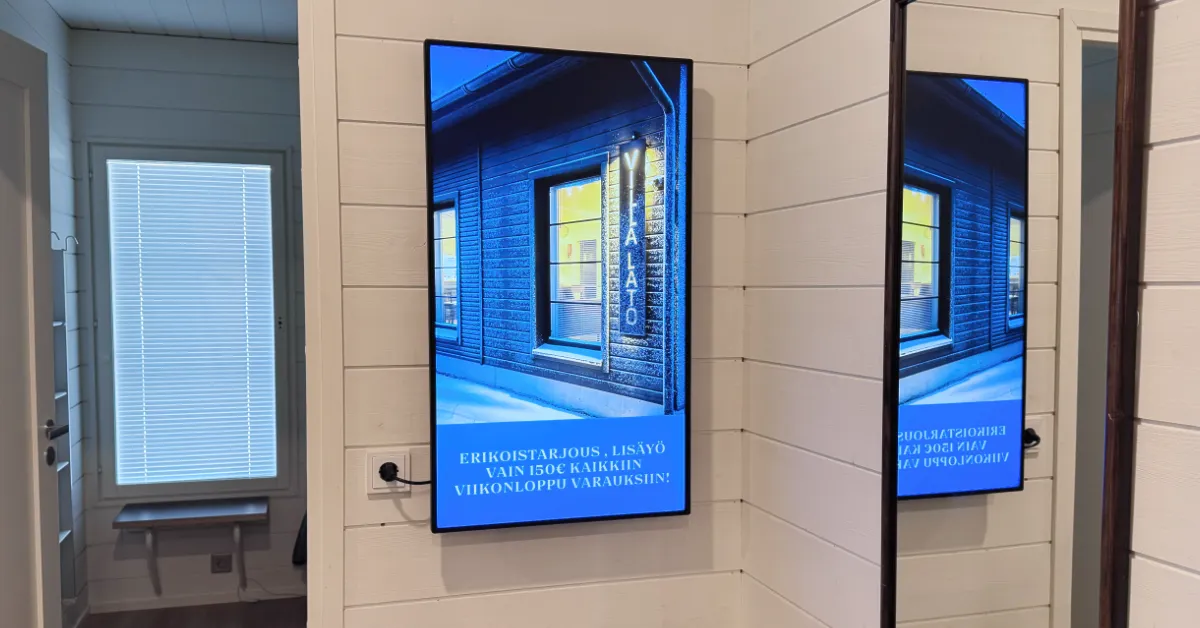
An advertising display is a digital screen, usually a regular TV or a commercial monitor, used to show promotional and marketing content in a physical space. It is the digital replacement for the printed poster, the A-frame sign, and the laminated offer taped to the window. Instead of designing, printing, and physically swapping a poster every time an offer changes, you update a file and it appears on every screen within seconds.
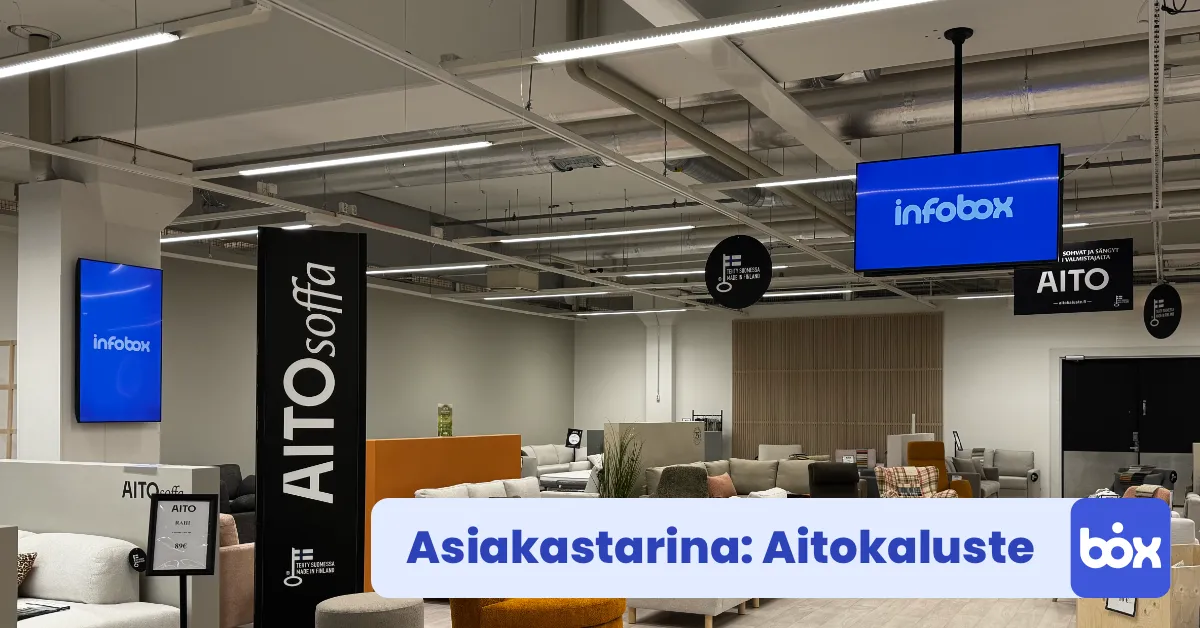
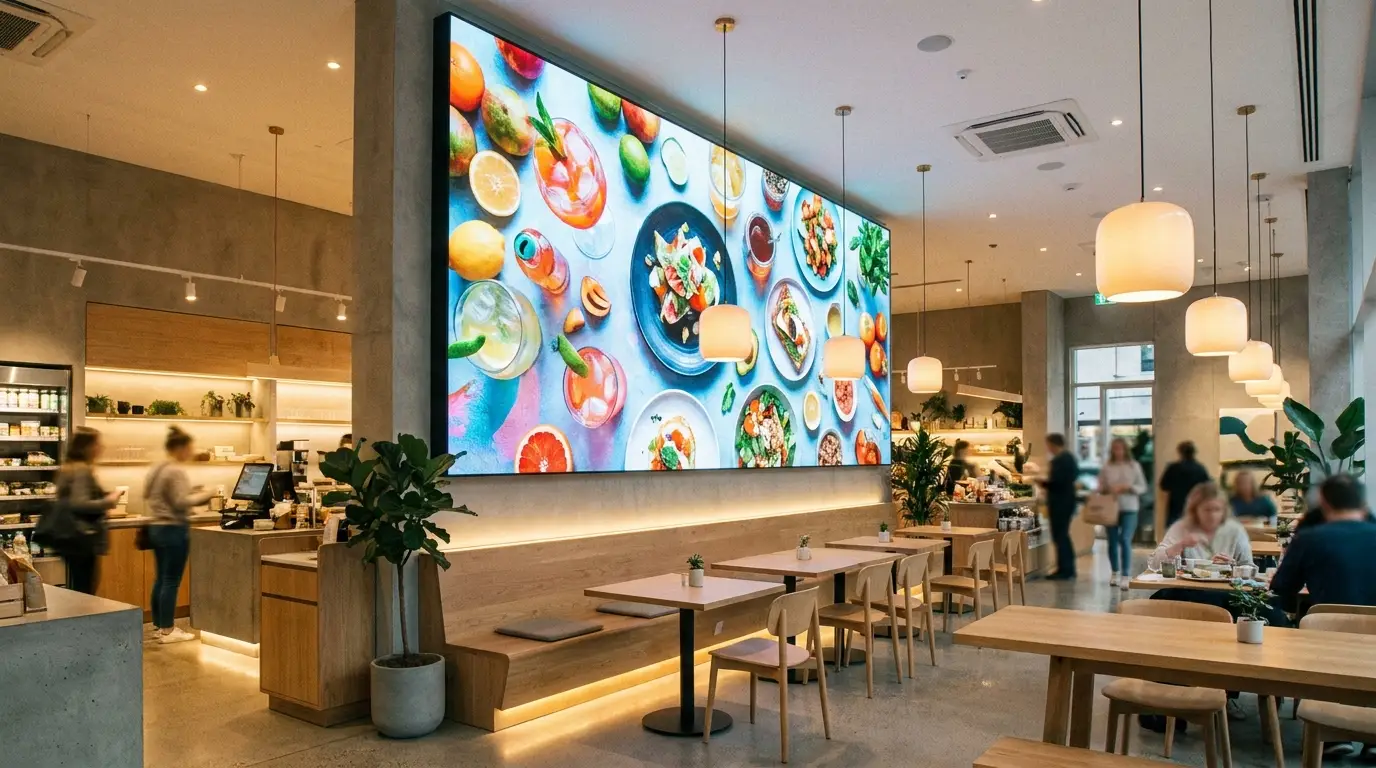
The term overlaps with digital signage: an advertising display is simply digital signage put to work for sales and promotion, typically in retail stores, restaurants, cafes, and shop windows. The goal is not information for its own sake but attention that turns into a purchase.
Why advertising displays outperform print and static signs
The case for moving advertising onto screens is not just that screens look modern. People respond to them. In a 2024 study by the Out of Home Advertising Association of America and The Harris Poll, 76% of consumers said they had taken action after seeing a digital out-of-home ad, including making an in-store purchase, visiting a restaurant, or talking about the brand. The same study found that 73% of consumers view digital out-of-home ads favorably, compared with 50% for TV and video, 48% for social media, and 31% for print.
Intent matters too. Of the consumers who noticed a directional ad pointing them to a nearby business, 51% visited that business, and 93% of those who visited made a purchase. A screen near the point of sale is not a billboard people glance at on the motorway; it is a prompt placed exactly where the decision happens.
A landmark in-store study by Nielsen, run across a chain of grocery stores, found that screens at the point of sale lifted sales by up to 33% for the brands featured, with 74% of shoppers noticing the screens. That research is now over a decade old, but it established a pattern that newer data keeps confirming: relevant content on a screen, in the right place, changes what people buy.
What to show on an advertising display
The content that works is the content people actually want to see. The OAAA study found that 86% of consumers find grocery deal messaging on these screens useful, 84% value restaurant deals, and 80% want time-sensitive promotions. In other words, the screen earns attention when it tells people about an offer that is relevant right now.
Practical examples that perform well on an advertising display:
- Today's offers and limited-time deals. A lunch special that changes daily, a happy-hour window, a weekend promotion. The screen makes "limited time" believable because it visibly changes.
- Featured products and upsells. A dessert next to the till, a premium option next to the standard one, a bundle that raises the average order.
- Seasonal and event campaigns. Swap the whole screen for a holiday or local event without ordering a single new print.
- Queue and window content. A bright screen in the window pulls people in from the street; content at the queue shortens the perceived wait and sells while people stand.
The one rule that beats all the others is freshness. A screen showing the same slide for three weeks gets ignored as thoroughly as a faded poster. A screen that visibly updates keeps earning a second look.
Advertising display vs a printed poster: the real difference
The market is moving in one direction. The global digital signage market was worth roughly USD 27.66 billion in 2025 and is growing at about 8% a year, with retail as the dominant sector (Mordor Intelligence, 2025). The reason is not novelty; it is operating cost. A printed campaign has a fixed cost every time it changes: design, print, ship, and physically replace the material in every location. An advertising display moves that cost to near zero after the screen is on the wall. The price change you publish from your laptop reaches every store the same afternoon.
That speed is also what makes promotions honest. "This week only" means this week only when the screen actually changes on Monday morning, automatically, on a scheduled playlist.
What an advertising display costs
You need two things: a screen and a way to put content on it. Most businesses already have the screen, or buy an ordinary TV. To make it an advertising display you add a media player and software.
- A modern Android TV runs the InfoBox app directly, with no extra device.
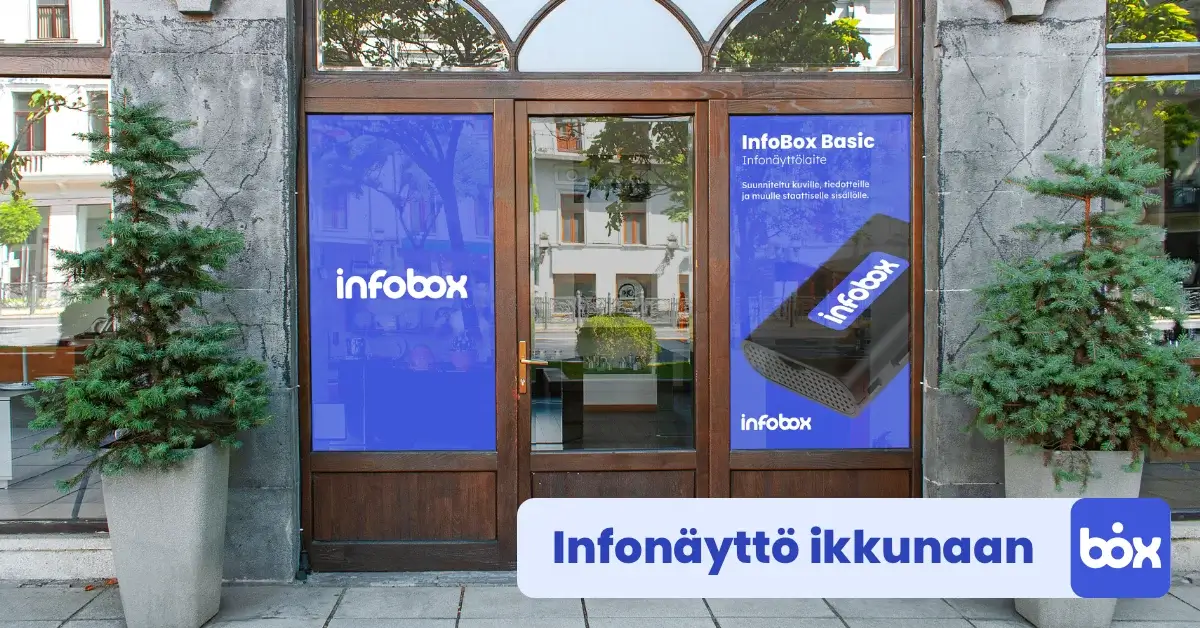
- Any other TV becomes an advertising display with a plug-in stick from €59 that connects to the HDMI port.
- The software starts at €7 per screen per month on an annual plan, covering remote updates, scheduling, and templates.
Compared with the recurring cost of print, the screen usually pays for itself on promotional flexibility alone. See the full breakdown on the pricing page.
How to set up your first advertising display
With a plug-and-play system, the path from box to live screen takes about 15 minutes: connect the media player to the TV's HDMI port, join Wi-Fi, sign in to the dashboard, and upload your first offer. No installer and no IT project. From then on you manage every screen remotely from a browser, which matters the moment you run more than one location. If you want the longer view of how the technology works, start with our guide on what digital signage is, or see how to turn an old TV into an advertising screen.
An advertising display is one of the few marketing investments that gets cheaper to run the more you use it. The screen is fixed cost; the campaigns on it are free. Ready to put a screen to work? See pricing or book a quick demo.
Frequently asked questions
What is an advertising display?
An advertising display is a digital screen used to show promotional and marketing content in a physical space, such as a shop, restaurant, or window. It replaces printed posters with content you update remotely in seconds.
Do advertising displays actually increase sales?
Yes. In a 2024 OAAA and Harris Poll study, 76% of consumers took action after seeing a digital out-of-home ad, and a landmark Nielsen in-store study found sales lifts of up to 33% for featured products. Relevant content placed near the point of decision changes what people buy.
What does an advertising display cost?
You need a screen plus software. A modern Android TV runs the InfoBox app directly; any other TV works with a plug-in stick from €59. Software starts at €7 per screen per month on an annual plan, with remote updates and scheduling included.
What should I show on an advertising display?
Time-sensitive offers, featured products and upsells, and seasonal campaigns perform best. The single most important factor is freshness: a screen that visibly changes keeps earning attention, while one showing the same slide for weeks gets ignored.

Author
Kasper Välimäki
CEO, InfoBox
Kasper is the founder and CEO of InfoBox. He has helped hundreds of Finnish businesses deploy digital signage in restaurants, retail stores, offices, and construction sites.
Learn more