A digital notice board reaches the staff that all-staff email misses. What to show, how to set one up, and what it costs, with real examples.
Key takeaways
- A digital notice board is a screen that replaces the paper noticeboard, showing announcements, schedules, and updates you change remotely.
- 54% of deskless workers have limited access to email, yet 69% of organizations still rely on it as the main internal channel (Firstup, 2025).
- Only 5% of employees say they get company information from digital screens, the most underused channel there is (Staffbase, 2025).
- A screen on the wall reaches everyone who walks past, no login and no inbox required.
What is a digital notice board?
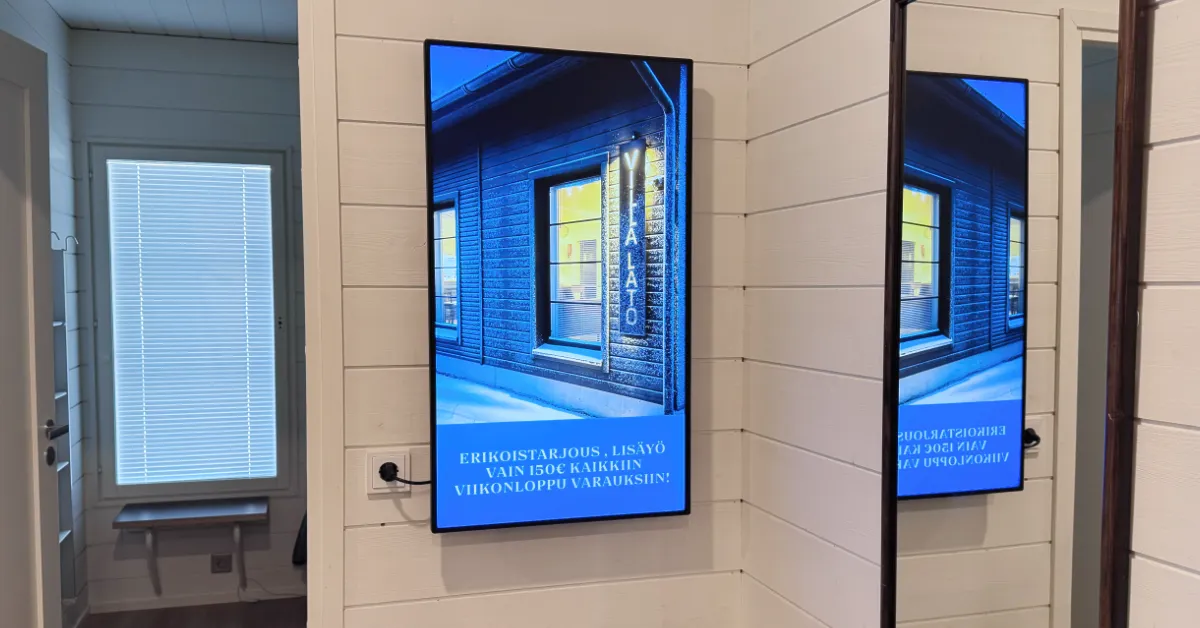
A digital notice board is a screen that does the job of the cork-and-pin noticeboard by the kitchen, the printed rota on the wall, and the memo nobody reads. It shows announcements, schedules, safety reminders, and updates, and you change what it shows from a browser instead of printing a new sheet and walking it to the wall. It is digital signage pointed inward, at your own team rather than at customers.
The appeal is simple. A notice on a screen in a high-traffic spot, the break room, the corridor by the time clock, the entrance, reaches people who never open the internal email. It requires no login, no app, and no effort from the reader beyond looking up.
Why the paper board and the all-staff email both fail
Most internal communication leaks before it arrives. According to Gallup's State of the Global Workplace, only 20% of employees were engaged at work in 2025, and low engagement costs the global economy an estimated USD 10 trillion, around 9% of GDP. A large part of that gap is simply people not getting the message.
Email is the default channel and the weakest one for a big share of the workforce. A 2025 Firstup survey of deskless workers found that 54% have limited access to email, yet 69% of organizations rely on it as their primary internal channel. The result is predictable: 32% of deskless workers say their organization communicates with them less effectively than with office staff, and 61% say timely, relevant updates would improve their performance. The information exists. It just never reaches the floor.
The paper board has the opposite problem. It reaches the room, but it is always out of date, nobody owns it, and a new notice buries the last one until the whole board becomes background. Neither channel gives you a current message in a place people actually look.
The channel nobody is using
When Staffbase asked employees where they actually get company information in its 2025 study, the answer exposed a gap. Email and memos led at 51%, followed by a direct supervisor at 47%, the intranet at 39%, newsletters at 22%, and a dedicated employee app at 15%. Digital screens came last, at 5%.
That 5% is the opportunity. Screens are the one channel that reaches deskless and on-site staff in a shared physical space, and almost no one is using them. Where companies do have screens, they work: among employees who have access to them, 71% to 72% rate their organization's crisis and urgent communication as good or excellent. A screen is hard to miss in a way an email in a 200-message inbox never will be.
What to put on a digital notice board
A digital notice board earns its place when it carries the things people need to know but currently have to chase:
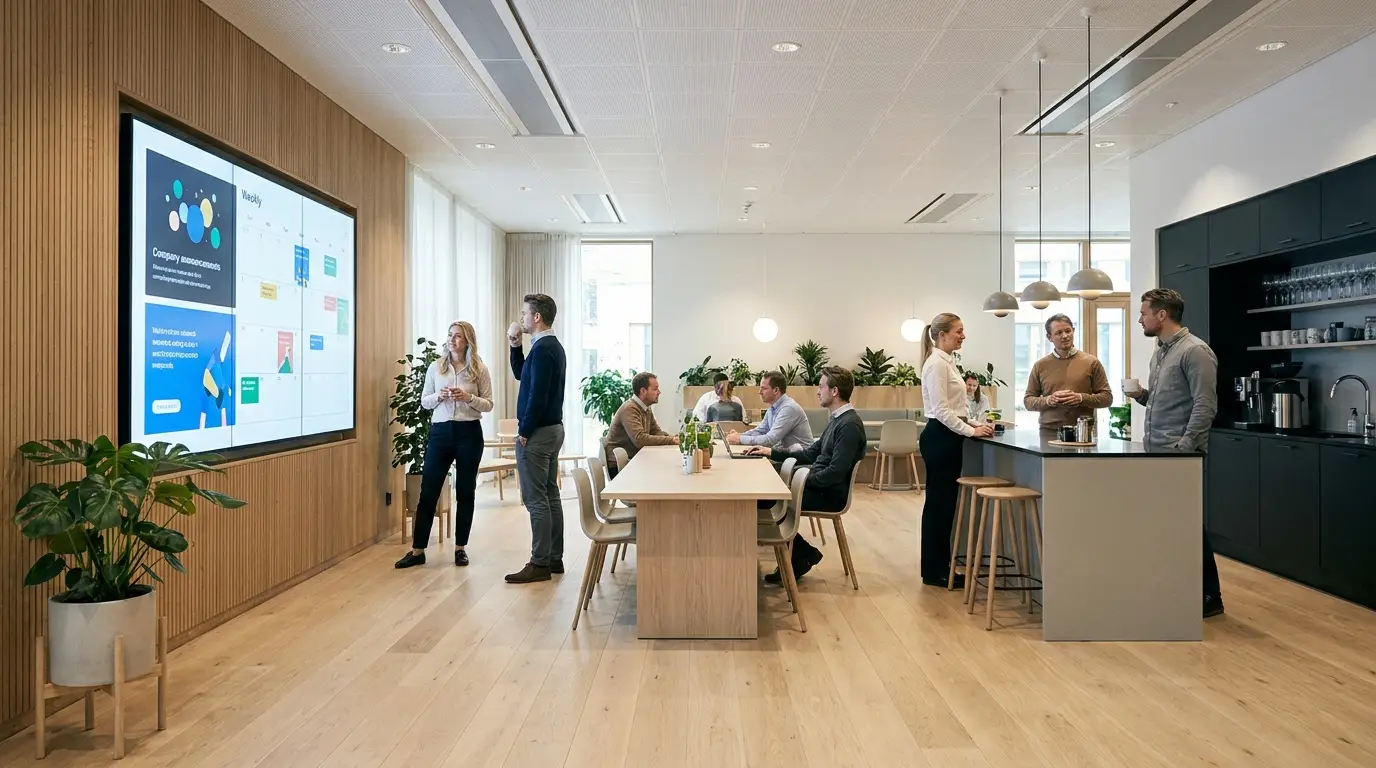
- Schedules and rotas. The current week's shifts, room bookings, or delivery times, updated centrally so the wall is never wrong.
- Announcements and news. New hires, policy changes, wins worth celebrating, the message that would otherwise be an all-staff email half the team never opens.
- Safety and compliance. Reminders, incident-free day counts, and procedure prompts in the place the work happens.
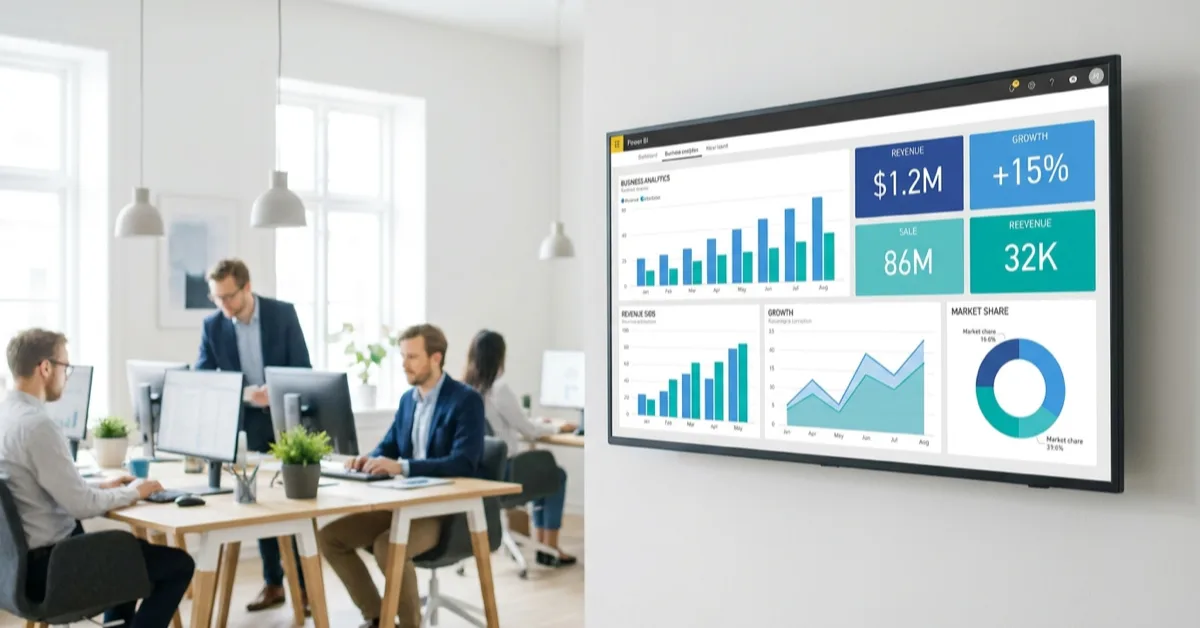
- Performance and goals. A live look at the numbers the team is working toward, from production targets to customer feedback.
- Welcomes and onboarding. A new starter's name on the screen on day one, or the orientation basics that new hires forget by week two.
Digital notice board vs email vs intranet
These channels are not rivals; they cover different ground. Email is for things that need a record or a reply. The intranet is the library you go to when you are looking for something. A digital notice board is for the message you want people to absorb without going looking, in a shared space, on a screen that is current because it updates itself. For a deskless or on-site workforce it is often the only one of the three that reliably lands. If your team is office-based, our guide to digital signage for the office goes deeper on placement and content.
What it costs and how to start
A digital notice board needs a screen and software. A modern Android TV runs the InfoBox app directly; any other TV becomes a notice board with a plug-in stick from €59. The software starts at €7 per screen per month on an annual plan, with remote updates and scheduling included, so the wall stays current without anyone walking over to it. See the pricing page for the full breakdown.
Setup is a 15-minute job: plug the player into HDMI, connect to Wi-Fi, sign in, and publish your first notice. The paper board has been doing a poor job quietly for years. A screen does the same job, current, visible, and managed from anywhere. See pricing or book a quick demo.
Frequently asked questions
What is a digital notice board?
A digital notice board is a screen that replaces the traditional cork or paper noticeboard. It shows announcements, schedules, and updates in a shared space, and you change what it displays remotely from a browser instead of printing and pinning a new sheet.
Why use a digital notice board instead of email?
Because a large share of staff never see the email. A 2025 Firstup survey found 54% of deskless workers have limited email access, yet 69% of organizations rely on email as their main internal channel. A screen on the wall reaches everyone who walks past, with no login or inbox required.
What should a digital notice board show?
Schedules and rotas, announcements and company news, safety reminders, performance goals, and new-hire welcomes. The content works best when it is current and changes regularly, which is exactly what a digital board does and a paper one cannot.
What does a digital notice board cost?
A modern Android TV runs the InfoBox app directly; any other TV becomes a notice board with a plug-in stick from €59. Software starts at €7 per screen per month on an annual plan, with remote updates and scheduling included.

Author
Kasper Välimäki
CEO, InfoBox
Kasper is the founder and CEO of InfoBox. He has helped hundreds of Finnish businesses deploy digital signage in restaurants, retail stores, offices, and construction sites.
Learn more